Home / Wigs, Makeup & Accessories
Face Paint Ideas for Kids: Quick Designs for Little Faces
Designs sorted by age and attention span, from a two-minute hand butterfly for toddlers to full animal faces for older kids, plus the safety checks parents should know.
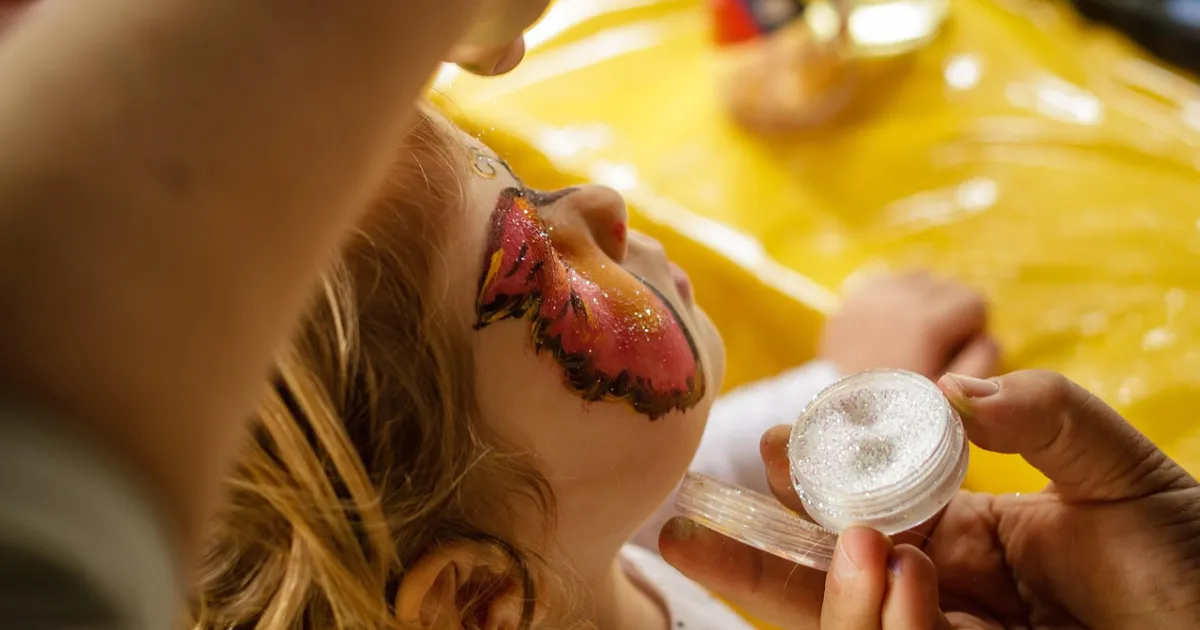
The best face paint ideas for kids are the ones that fit the child's patience. A toddler may sit for two minutes, a six-year-old for five, and a ten-year-old will happily wait fifteen for a full tiger. Below are designs sorted by age, with the safety checks that make face painting a good memory rather than an itchy one.
Before you start
- Patch test a day or two ahead. The FDA suggests testing makeup 24 to 48 hours in advance by putting a small amount on the arm of the person who will wear it. Redness, rash or swelling there is a sign of a possible allergy.
- Use paint made for skin. Choose face paint labeled for use on the face and follow the directions. Craft paint, poster paint and markers are not made for skin.
- Skip irritated skin. Do not paint over cuts, scrapes, rashes or eczema patches.
- Ask first. Ask the child if they want to be painted, and ask parents about allergies when you paint other people's children.
- Keep paint away from the eyes, and never paint on eyelids with a product that is not labeled for the eye area.
Toddlers and preschoolers: two-minute designs
Small children wriggle, so stay small and fast. The back of the hand is a great alternative for a child who does not want anything on their face.
- Red nose and rosy cheeks: a dot and two circles, the fastest clown or doll look there is.
- Single heart or star on the cheek.
- Hand butterfly: two teardrops each side and a body line on the back of the hand.
- Bunny nose: a pink nose and three whiskers on each cheek.
- Little pumpkin with a green stem, perfect for a first Halloween.
- Rainbow sponged across one cheekbone.
Ages 4 to 7: half-face designs
Most children in this age group can sit for five minutes if they can watch in a hand mirror afterward and choose from a short menu of three or four options.
- Cat: white muzzle around the mouth, black nose and whiskers. Our cat makeup guide has a full-face tabby version.
- Puppy: a brown patch over one brow, a black nose and a pink tongue painted on the chin.
- Superhero mask: a colored band across the upper face, stopping at the edge of the eye socket.
- Princess or prince crown on the forehead, with "jewels" dotted in three colors.
- Ladybug on one cheek with a small flower on the other.
- Friendly monster: green cheeks, a few spots and two little horns on the forehead.
Ages 8 and up: full faces
Older children usually want something bigger and often already know exactly what they want. These take ten to fifteen minutes.
- Tiger or lion with full base color and bold stripes or mane.
- Skull with white base and dark painted teeth.
- Galaxy sponged across half the face with white stars.
- Dragon with scales made by sponging through clean netting.
- Mermaid scales on the cheekbones with a few glitter accents.
- Team colors for game day, with a number on one cheek.
For step-by-step instructions on the simplest of these designs, see our easy face paint ideas.
Running a face paint station at a party
At a birthday party or school event, a little organization keeps the line moving and the paint clean.
- Offer a menu of six designs with pictures, so children pick quickly.
- Use clean water and change it often. Keep a separate cup for rinsing brushes and one for wetting paint.
- Use a fresh sponge for each child and wash brushes between children.
- Set a time limit, such as three minutes for a cheek design, and paint the youngest guests first.
- Keep wipes and a mirror handy so children can see the result and fixes are quick.
Glitter, gems and extras
Glitter should be cosmetic glitter, not craft glitter, and should stay away from the eyes. Skip stick-on gems for very young children, who may pick them off and put them in their mouths. For trick-or-treating, face paint is often a better choice than a mask: the FDA recommends makeup and hats rather than masks that can block a child's vision. Pair a painted face with a simple homemade outfit from our guide to DIY Halloween costumes for kids.
Taking it off
Remove paint before bed, using the method on the label: often warm water and mild soap for water-based paint, or a gentle makeup remover for cream paint. Wipe gently, especially around the eyes. If a child's skin becomes red, itchy or swollen, wash the paint off and call your pediatrician or pharmacist for advice.
Questions
What age can kids get their face painted?
There is no single rule. Many painters keep designs for toddlers very small or on the hand. Always patch test first and follow the age guidance on the paint's label.
What are easy face paint ideas for kids?
A heart, star, rainbow, pumpkin, bunny nose or cat whiskers. Each takes about two minutes and uses one or two colors.
How do I get a child to sit still for face painting?
Keep the design short, let the child choose it, talk them through each step and show them a mirror at the end. Paint while they sit at your eye level.
How do I remove face paint from a child's face?
Follow the label. Water-based paint usually comes off with warm water and mild soap; cream paint may need a gentle makeup remover. Always wipe softly.